


The General Election
- Ella Peebles

- Dec 10, 2019
- 8 min read
I've never really been interested in politics. It wasn't until very recently that I realised just how much impact even the smallest of voices can have on the decisions that higher authorities are making. I have gained a real interest in it during the past few weeks. I think it's something that we don't get educated about enough during high school or even when we go on to college. There are issues facing this country that should be stressed to people my age to the utmost importance; we are the future, and by the time we get to 18, it is hard for us to make decisions on these issues if we don't know what we are voting for. This year, figures have come through that suggest many people throughout the country are pulling out of voting because they have given up with the lack of success and innovation from the government. It's hardly surprising; we've all seen it. Bickering on live television; fake news on the media; time and time again, parties are attacking each other, rather than reassuring us that they will deliver what they have promised. Now, there lies a list of broken promises: Brexit, climate change, security, public services, the NHS. The list goes on and on. In this blog post, I want to talk about what this election means to me, and my thoughts on how we can all come together through democracy to make our voices heard.
Brexit. The word on everyone's mouths since 2016, and still, nothing has been successfully delivered. After a strenuous campaign, Britain voted to leave the European Union, whether it was in favour of economic opportunities that were being withheld due to EU regulations, a revolt against economic problems in the North due to the North-South divide, the need for stronger immigration laws, or as a way of promoting anti-establishment views, from a parliament who was seen to be largely pro-Remain. Regardless of the reason, Britain chose to leave, and David Cameron stepped down from office. For three years, we watched as Theresa May was unable to get a suitable deal for our country, and consequent fears of a no-deal Brexit started to loom on the horizon. Very few politicians stopped to wonder, whilst they were desperately trying to fulfill a deal, what was actually going on around them; blind to their own responsibilities. In the words of the Labour party, "some people say this is the Brexit election. But it’s also the climate election, the investment election, the NHS election, the living standards election, the education election, the poverty election, the fair taxes election. Above all, it’s the change election." The NHS is going into decline, suffering from increased privatisation and lack of nursing staff. UK poverty has risen, and the number of supplies for food banks has risen by over 73%. Rainforests are burning, and global temperatures are slowly rising every day, but, of course, Brexit is still the most important matter to consider. One of Johnson's main arguments during this campaign has been that the completion of Brexit is essential before we start focusing on issues in this country. He assures us he has a deal that is "oven-ready" for January, but many have expressed their concerns regarding trade deals that will continue to be on the table for years to come. What makes us confident that Johnson can deliver on what he has said? The conservative government has had three years to deliver the public's wish, but have failed to do so. I think what's crucial to me this election, is being able to put my faith in a party that I can trust, and all that Johnson has done, during his time in power, is give me a lack of faith in politics and progression in moving forward.
Having a family member in the NHS really opens your eyes to the disarray that it has been placed under recently. Hospitals are crumbling- there are not enough staff to get around all the patients, and equipment is extremely outdated. The NHS is a beautiful thing. It was built in a time where our country was struggling in the aftermath of WW2, and for the first time, everyone in our country had access to free healthcare; people that before this, couldn't afford it, and the way that we are heading installs fear that this might be the case again. Privatisation is happening. It's being done little by little, going unnoticed by the general public, but not by those who are affected by it and work in the NHS. We have a shortage of 43,000 nurses, not enough hospital beds, and people waiting for life-changing operations that aren't being delivered. Labour promises to increase spending in the health sector by 4.3% each year and are putting £1.6 billion a year into mental health services. Despite the conservatives claiming the NHS to be a "fundamental" priority, they've been the ones who have stood by for the past 10 years and let it fall. It's a striking example of inequality, and it's true of all public services throughout the country. Privatisation only works for the few. The NHS was never made for the few; it was made to unite us and bring healthcare rights to all. I have a lot to thank the NHS for. The surgeons and nurses provided an excellent service for me whilst I was in Alder Hey for my scoliosis operation. I owe it to them to remember that service, and to hope for significant improvements and changes for something I am extremely proud to have in this country.
Education is perhaps one of the most central things in my life at the moment, and, along with the NHS, it has not been given the attention it deserves in recent years. In high school, there were times when we were told that they couldn't afford to print sheets of paper. Teachers are striking across the country for students' rights, our futures and our entitlement in post-16 education. Last week, I attended a question time event in college, and the lack of interest by some of the speakers regarding our future, was quite frankly, worrying. I think I speak on behalf of most people my age when I say that the disregard of our opinions is narrow-minded and assumptious. Most of us in college might not be able to vote in the election this year, (and I know that if I could I would) but that doesn't and shouldn't make our views any less valid. Most university fees for individuals now stand at around £9250. Labour plans to scrap tuition fees and widen access to higher education, at a time where demand for high-level technical jobs are necessary for reducing carbon emissions, and investing in renewable resources. Again, the conservatives were giving us broken promises by promising £14 billion extra in schooling and educating, which has, not surprisingly, recently been discredited. This question time event also shed light on a number of other issues and I really enjoyed going to listen to what all candidates had to say. The turnout was a prime example of how much young people are willing to get involved, and the majority of candidates stressed the importance of ensuring that we are heard, and that we give our input on the future of the country, and in some cases, the world. This brings me nicely on to my next point regarding climate change. There are rainforests being burned and chopped down everyday; carbon emissions are reaching higher levels, and the population crisis is leading to a build up of waste in landfill sites and in large expanses of water. I've spoken to people who show no interest in this; they don't think it will affect them, and so they push it to the side. Let me remind everyone that we are facing a climate emergency! Climate authorities have already said that if we don't provide drastic change, by 2030, it will be too late. That means that all other decisions and issues facing us may as well be cast aside, because they will have very limited relevance when the future of the entire planet is at stake. I just hope that whichever government gets into power on the 12th December will stick to the plans they have made to ensure the UK plays its part in making sure that this emerging crisis is avoided.
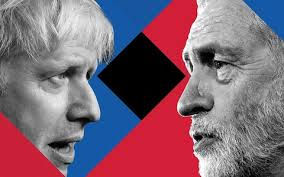
All these decisions and problems that I've mentioned will either be in the hands of Boris Johnson or Jeremy Corbyn following the 12th December. During the past 4 years, the consensus has been to avoid voting Labour, in order to avoid putting Corbyn into office. Let me be controversial here by saying that I have nothing against Jeremy Corbyn. I do, however, believe that Labour would have been much more successful this year under a different leader. Corbyn, despite his faults, appears to me as a human being, just like the rest of us, which unfortunately I can't guarantee of Boris Johnson! Johnson is robotic. He lies. He's full of empty promises, and I don't believe he is fit to be running this country. He has been in power for 6 months and has already proved that much. I never enjoy listening to his public speeches, which always seem to come back to Brexit, and show no real interest in the other "issues" that he says he will deal with after we "get Brexit done." Jeremy Corbyn, on the other hand, does show this interest, from my perspective. He encompasses what the Labour party stands for, and whilst he isn't the strongest leader they've ever had, what I think this country really needs is change, in any way we can get it. We have spent too long in the same, unsuccessful, monotonous cycle and anything has to be better than our current static appearance. For a highly developed country, it just feels like we are moving backwards. The cases of Labour's anti-semitism claims spewed up by the media are simply another example of this election being fuelled by anger and disagreement in politics. Unfortunately, people are too ready to believe what they read in the papers, and are naive when they don't question these sources, which goes for allegations made against Johnson too, which, despite my general dislike of him, aren't always true. We saw 'Fake News' reach it's head with Donald Trump in America, and it seems to be making itself known in the UK, deceiving us even more than we already are. We are here. We can, and will be heard. We will not be deceived.
It's a shame that I can't vote on Thursday, because it's the first time that I would have liked to. Do I think the voting age should be lowered to 16? No, because I don't think there is enough educating of politics in schools, and therefore it would be unwise to assume that we can make an informed decision. It's hard enough for adults to know what's going on and what to decide, which has been catalysed by the failure of politicians to be self-assured and focused. At least Margaret Thatcher got things done, whether it was for the right or wrong reasons. Do I think there should be more education regarding politics in the future? Yes, because it's what's going on in this country, which is arguably one of the most important things for us to be aware of. But people are losing interest. Politics is losing it's appeal. I would say that the most important thing for this election, is to get a leader who restores our faith in leadership and direction; a direction that will lead us towards equality, opportunity and real change.


Comments